Series on mass notification systems – PART 4
The continuing importance of mass notification systems
A mass notification system (MNS) is an essential part of a building's safety infrastructure. It provides targeted, understandable, and timely information during emergencies such as fires, incidents involving hazardous materials, security breaches, or environmental threats. Unlike traditional fire alarms or public address systems, an MNS is designed to ensure comprehensive communication under high-pressure conditions, ensuring a rapid response from occupants. However, installing an MNS is only the beginning. Maintaining its performance, reliability, and compliance over time requires deliberate and ongoing effort.
Standards governing mass notification systems
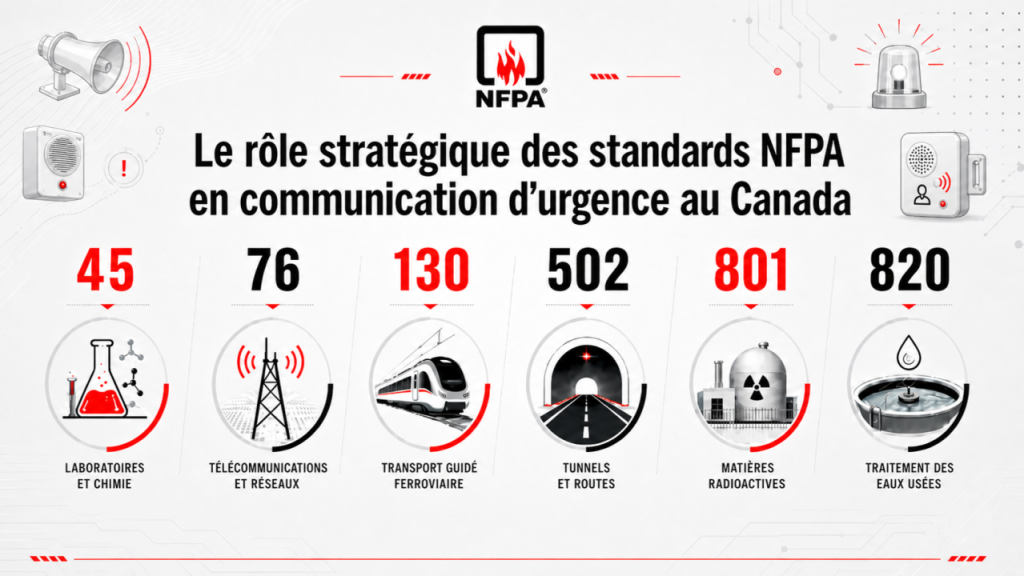
Maintaining an effective PSNS involves strict compliance with several standards that define operational expectations and verification practices. Key references include NFPA 72, Chapter 24, the American standard governing emergency communication systems. Other standards such as CAN/ULC-S541 for emergency loudspeakers, CAN/ULC-S1001 for integrated system testing, and CSA C282 for emergency power supply systems also play a crucial role. Together, these standards provide a comprehensive framework for the operational lifecycle of an EMS.
Fundamental design principles for long-term system resilience
Several fundamental design elements directly influence the resilience and long-term maintainability of an NSM. Proper zoning and coverage planning ensures that messages reach all intended areas without excessive saturation or communication gaps. Speech intelligibility, measured using STIPA indicators, must meet strict criteria to ensure that voice communications are clear and actionable in an emergency. System redundancy is essential to eliminate single points of failure; duplication of key components such as amplifiers, controllers, and communication links significantly improves system survivability. The use of fire-resistant cables, such as FHIT7-certified systems in accordance with CAN/ULC-S139, ensures that communication channels remain functional in the event of a fire. In addition, compliance with emergency power supply requirements, which provide for 24 hours of monitoring and up to two hours of full alarm operation according to CSA C282, is mandatory. When integrated with fire alarm or building systems, NMS installations must meet the interoperability and verification requirements set out in CAN/ULC-S1001.
The new challenge: cybersecurity in mass notification systems
Beyond physical and electrical design, the growing shift toward IP-based communication architectures introduces new cybersecurity challenges. Mass notification systems must now be designed with robust cybersecurity measures, including hardening devices against unauthorized access, separate and secure network architecture, and rigorous firmware management. It is essential to build cyber resilience into MNS infrastructure to ensure that the system remains operational and reliable, especially during critical emergency situations.
Testing, inspection, and preventive maintenance
Continuous testing and inspections are essential to verify that the MNS continues to function as intended. Factory acceptance tests (FAT) confirm that the system is functioning properly prior to delivery, while site acceptance tests (SAT) validate proper installation and integration. For systems interconnected with fire alarms, integrated system tests (IST) in accordance with CAN/ULC-S1001 confirm that all components are functioning consistently. After commissioning, regular inspections in accordance with CAN/ULC-S536 for fire alarms and CAN/ULC-S576 for NSMs must be performed at regular intervals, typically once a year. Preventive maintenance activities, such as battery inspections, wiring evaluations, device firmware updates, and speaker integrity checks, are essential to proactively address issues that could compromise system integrity.
Owner responsibility and risk management
Facility owners and managers have a legal and moral responsibility to ensure that their mass notification systems are compliant and functioning properly. Failure to maintain the system not only results in regulatory penalties, but can also invalidate insurance coverage and expose organizations to operational and reputational risks. A robust service program, including routine testing, preventive maintenance, corrective repairs, comprehensive documentation, and regular staff training, protects the organization's investment in life safety infrastructure and ensures that the system will function when it is most needed.
Ensure permanent availability
Maintaining the performance of a mass notification system is not a passive task; it requires active engagement, technical diligence, and a commitment to ongoing compliance. A mass notification system is critical infrastructure, and its continuous availability has a direct impact on personal safety, business continuity, and regulatory compliance. Through rigorous maintenance programs, cybersecurity vigilance, and strategic lifecycle management, organizations can ensure that their mass notification system remains resilient, compliant, and operational throughout its lifetime.
CSX Group Inc.: Your partner for long-term success
At CSX Group Inc., we specialize in supporting the entire lifecycle of mass notification systems, from design to audits, including training and documentation services. Our experience in the industrial, energy, transportation, and municipal infrastructure sectors allows us to take a comprehensive, risk-based approach to system resilience and compliance management.
If your organization is planning an upgrade, audit, or performance evaluation of its mass notification system, we invite you to contact us. Together, we can ensure that your MNS continues to protect lives and support operational excellence, today and in the future.